Ayin’s Unblinking Eye, Part Two: Candy-Eyed Wolves, Surety-Seeking Servants, and the Two Liberties That Walk Into a Bar - Psalm 119:121-128
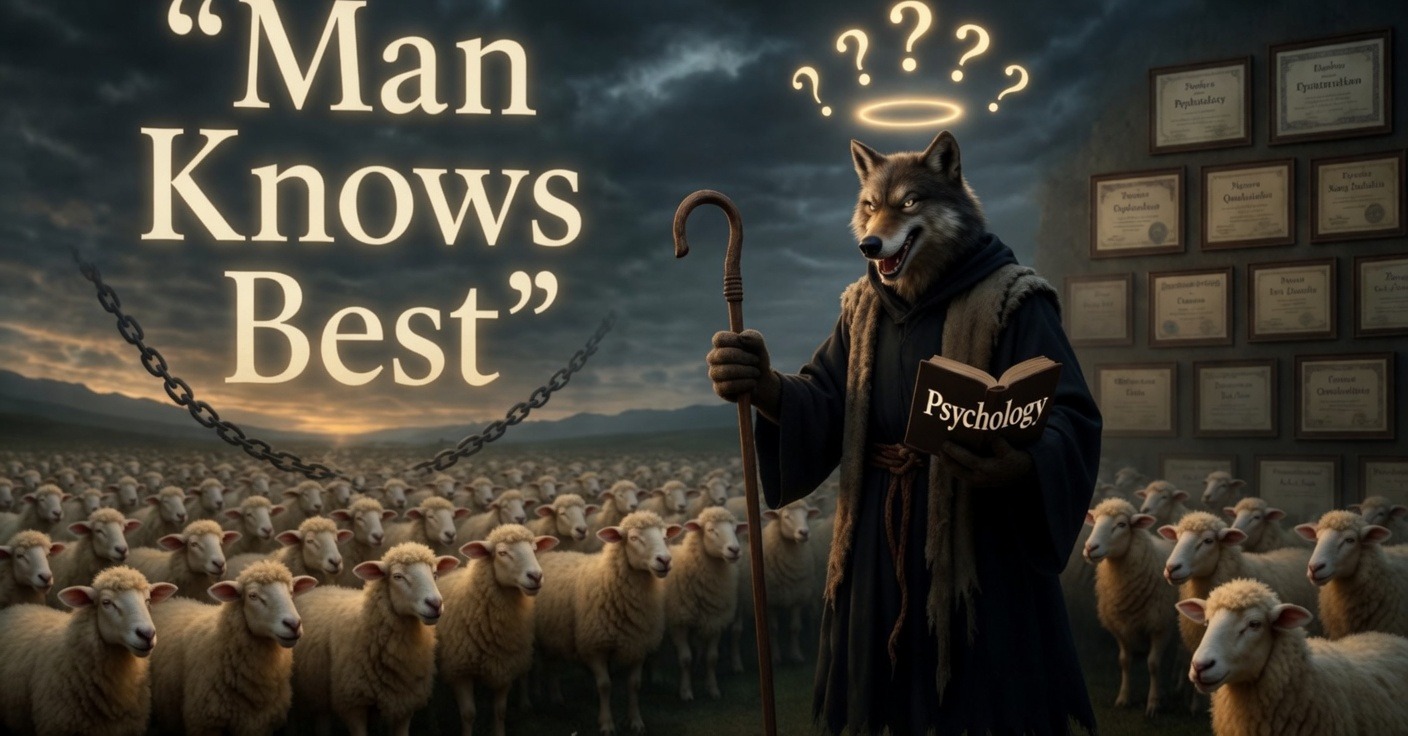
“And his eyes brightened!” (1 Samuel 14:27, with extreme artistic license) Behold the wolf after raiding the forbidden honeycomb of doctrine — eyes gleaming like lollipops, utterly shocked that the sweetness of the Word hit harder than expected. “It is time for the LORD to act… I love your commandments above gold, above fine gold!” (Psalm 119:126-127) 🐺🍭
Ayin’s Unblinking Eye, Part Two: The Servant’s Plea, the Holy Tension, and the Two Liberties – Psalm 119:121-128 (Continued)
Psalm 119:121-128 (Ayin stanza)
I have done what is just and right; do not leave me to my oppressors. Be surety for your servant for good; let not the insolent oppress me. My eyes fail for your salvation and for the fulfillment of your righteous promise. Deal with your servant according to your steadfast love, and teach me your statutes. I am your servant; give me understanding, that I may know your testimonies! It is time for the LORD to act, for your law has been broken. I love your commandments above gold, above fine gold. Therefore I consider all your precepts to be right; I hate every false way.
Before the Pharisees sharpen their stones or scribes wipe their brushes: “You blind guides, straining out a gnat and swallowing a camel!” (Matthew 23:24). The author of Psalm 119 does not posture in self-righteous armor. He appeals boldly to the L-rd’s steadfast love while still hungering to learn His statutes, begging for understanding like a servant who knows his own frailty.
“I Have Done Justice” – עָשִׂיתִי מִשְׁפָּט (asíti mishpát) The psalmist dares to declare, “I have done what is just and right.” This is no boast of sinless perfection but the honest ledger of a man who has walked in integrity amid a crooked generation. In Hebrew, the phrase carries weight: active doing of mishpat—justice as ordered righteousness, not abstract theory. Yet the very next breath pleads for deliverance from oppressors.
At times, the most piercing honesty—avoiding self-deception—is to confess not only sins of commission in thought and deed, but the righteous things left undone as the setting of the sun. We petition forgiveness for both what we have done and what we have failed to do. The Ayin eye sees this tension unflinchingly: true servants own their partial obedience while clinging to the Surety who stands good for them.
The Servant’s Cry for Understanding “Deal with your servant according to your steadfast love, and teach me your statutes. I am your servant; give me understanding, that I may know your testimonies!”
This is Solomon on his knees: Give your servant therefore an understanding mind to govern your people, that I may discern between good and evil, for who is able to govern this your great people? (1 Kings 3:9). This is the young Jesus advancing: “And Jesus increased in wisdom and in stature and in favor with God and man” (Luke 2:52). The psalmist does not presume mastery; he begs apprenticeship under the Master.
Even Moses felt the weight. When the Spirit rested on the seventy elders and Eldad and Medad prophesied in the camp, Joshua urged restraint (Numbers 11:24-30). Yet the L-rd’s response rebuked jealousy. John echoed the same spirit when he reported outsiders casting out demons: “Teacher, we saw someone casting out demons in your name, and we tried to stop him, because he was not following us.” But Jesus said, “Do not stop him, for no one who does a mighty work in my name will be able soon afterward to speak evil of me. For the one who is not against us is for us. For truly, I say to you, whoever gives you a cup of water to drink because you belong to Christ will by no means lose his reward.” (Mark 9:38-41).
Ayin’s eye discerns allies by fruit, not franchise. The servant seeks understanding not to lord it over others, but to walk humbly in the testimonies.
It Is Time for the L-RD to Act “It is time for the LORD to act, for your law has been broken.” Here the psalmist’s patience frays into prophetic urgency. The eye that has watched injustice does not grow cynical—it grows expectant. When human systems fracture under the weight of broken law, the servant does not despair. He calls upon the Judge of all the earth to rise. This is not presumption but the raw logic of covenant: if Your word is true, then act, L-rd, for Your own name’s sake.
Above Gold: Holy Obsession and Holy Opposition “I love your commandments above gold, above fine gold. Therefore I consider all your precepts to be right; I hate every false way.”
Love for the commandments is not mild affection but a superior treasure—better than the finest gold. Out of this affection flows discernment: all precepts are right, therefore every false way is hated with clean, undiluted opposition. No nuance, no both-sides-ism. Ayin sees clearly and chooses sides without blinking.
The Tension: Advocates for Sinners or Saved by G-d for G-d? (Romans 5) Consider the tension that grips both humanists and those who wrestle with being instruments of an angry G-d. This tension often transforms man into the sinner’s defense attorney rather than trusting the sinner’s only hope: to be saved from G-d by G-d for G-d. (Explicit Intent: John 20:23 cf. Matthew 23:24)
Unbiblical doctrines sprout here like weeds—soul sleep, annihilationism—attempting to airbrush the Wrath of G-d from the canvas. Yet wrath is no detachable accessory. Holy is the summation of all G-d’s attributes. G-d is not merely righteous; He is holy righteous. Every characteristic interlocks: justice and grace, wrath and mercy cannot be played against one another. This theme thunders through Revelation’s dark horizons, which become lightning-like fractured glass, and amid the fire and brimstone of Genesis 19:24 whether in judgment or salvation, the ground cries, “Holy!” and the twenty-four elders cast their crowns, declaring the L-rd glorious.
Contrast the three crosses stark against the Golgotha sky—where demons perhaps sneered at the apparent death of G-d. Yet that very death crushed the serpent’s head, making even hell a footstool. Who can stand before the holy, immutable, omniscient, omnipotent Judge of creation? Only those clothed in the righteousness of the crucified Surety.
Application: Two Sides of the Same Coin The founding of America offers a living parable. The forefathers embedded statements of faith at the colonial and heretofore state levels before crafting federal documents that recognized government as ordained by G-d: a minister of justice bearing the sword against evil (Romans 13). Yet the serpent’s whisper from Eden lingers—that honeyed half-truth promising autonomous rule without the L-rd.
Welcome to classical libertarianism in its extremes: the autonomy of man to govern himself without interference. As unbelief spreads, this ideal grows hazy. For the believer, true freedom and liberty mean release from sin’s bondage—liberty to serve G-d with gladness. For the unbeliever, freedom devolves into humanistic sensuality: personal pleasure as the highest good, regardless of what is truly right or evil.
The Ayin eye refuses to blink at this forked pathway. One path leads to the footstool of the King; the other to the rubble of Babel rebuilt. The servant who has done justice, loved the commandments above gold, and hated every false way will cry out with the psalmist: Be surety for your servant for good. And the L-rd who sees will answer in steadfast love.
Keep the eye single. The Watchman does not sleep.
Soli Deo Gloria. Wit
Conversion Nicodemus. Tell me one thing; why do you follow Jesus? John. It was because of John the Baptist first. Nicodemus. But why because of him? John. One day when we were standing by the Jordan, John and my cousin Andrew and myself, We saw a man pass by, tall as a spirit; he did not see us though he passed quite near; Indeed we thought it strange; his eyes were open but he looked on nothing; And as he passed, John, pointing with his finger, Cried- I can hear him cry it now- Behold, the Lamb of God! Nicodemus. And he, what did he say? What did he do? John. Nothing, we watched him slowly climb the hill; His shadow fell before him; it was evening. Sometimes he stopped. To raise his head to the home-flying rooks Or greet a countryman with plough on shoulder. Nicodemus. John said, Behold, the Lamb of God? John. He said so. Nicodemus. And from that day you followed Him? John. No, that was afterwards in Galilee. Nicodemus. But tell me why; why did you follow Him? John. I think it was our feet that followed Him; It was our feet; our hearts were too afraid. Perhaps indeed it was not in our choice; He tells us that we have not chosen Him, But He has chosen us. I only know That as we followed Him that day He called us We were not walking on the earth at all; It was another world, Where everything was new and strange and shining; We pitied men and women at their business, For they knew nothing of what we knew- Nicodemus. Perhaps it was some miracle He did. John. It was indeed; more miracles than one; I was not blind and yet He gave me sight; I was not deaf and yet He gave me hearing; Nor was I dead, yet me He raised to life. Andrew Young, 1885