Ya don't have to be a bacon loving Calvinist to be Hyper-Calvinist
Because some pigs just won’t stay in their theological pen. Before we dive in, a quick note on past scribblings: I once tried playing the patient professor, arming every point with footnotes thick enough to stop a charging Pharisee. Then I learned the hard way—lazy readers don’t care about your research; they care about their feelings. So I started sharpening the quill. Today, though? I’m attempting something novel: honey without the immediate sting. Wish me luck. I’ll probably fail gloriously by paragraph three.
I “feel” different than I did a decade or two ago. The cultural air has shifted. Political correctness is on life support, and open hostility to religion no longer hides behind polite veils. No one’s dusting off the old anti-heresy statutes anymore. Rome, Canterbury, or whatever credentialed tribunal once held the keys—none of them are coming for us with pitchforks and papal bulls. So the writing can breathe a bit freer.
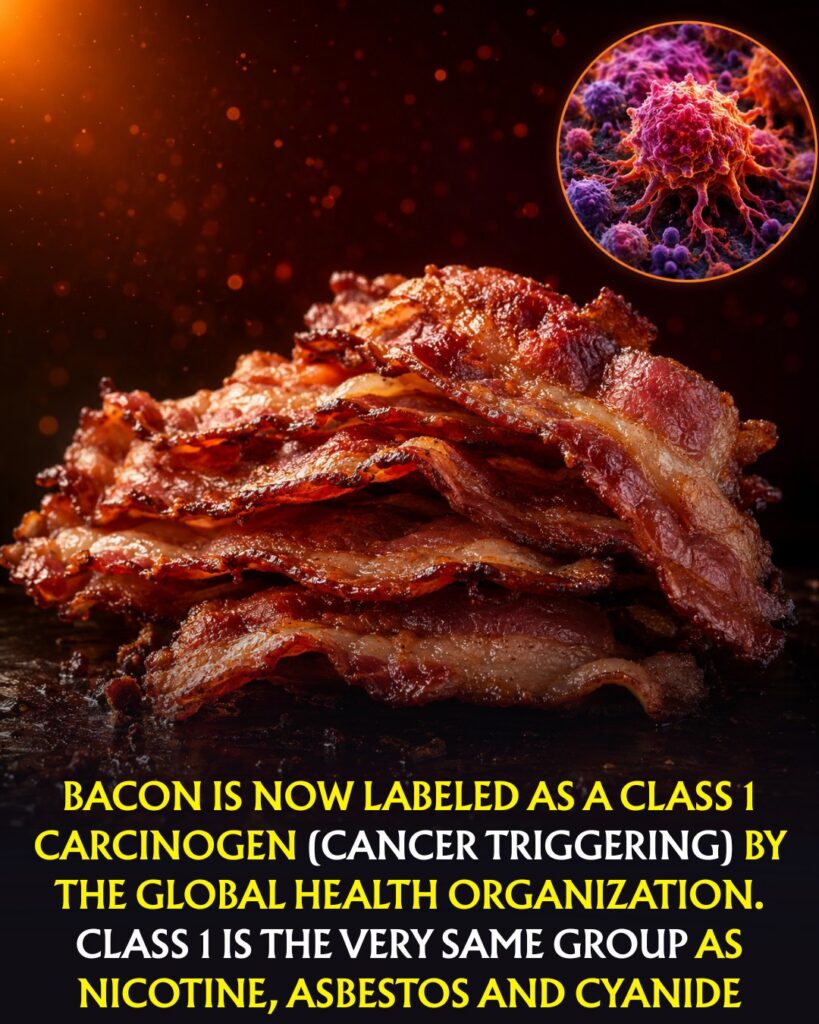
And that, dear reader, brings us straight to the matter of bacon.
The Swine, the Fruit, and the Great Exception Bacon. Glorious, crispy, salty redemption in strip form. The exception that proves the rule—or at least makes us question it. Genesis 3:1 whispers in the background: “Did G-d really say…?” Not about the tree this time, but the pig (Romans 14:1-12). The principle remains stubbornly the same. Do we need a pristine rational defense worthy of some Enlightenment salon, as if Sī ratiō dūceret, fēlīx essēs (“If reason alone led you, you’d be happy”) was the battle cry of the Reformation (emph. Solus Christus)?
What if the only reason is simpler, almost scandalous in our age: G-d said so (Genesis 1 cf. John 1), and He is trustworthy? Confidence in His word over our clever justifications. Reason has its place in apologetics, sure—until a shinier counter-reason struts by and everyone scatters like cats at a vacuum cleaner demo.
A reasonable pig cannot raise itself. It can root, rationalize, and rearrange the slop into a very tidy argument—but the grave does not care how well the syllogism was plated. There is a difference between the Logos concerning the G-dhead and the little lamp we call the light of man (Isaiah 55:6-9): our own faculties of reason and logic. —heat death for the clever, one cell at a time.
And die they do. Wit ends at death as surely as the last neuron fires and the room fills with fanciful medical lingo about “seeing a light.” Observable nature, left to itself, has never produced one verified account of something truly dead coming back—not metamorphosis, not hibernation, not a clever pause. Dead is dead. So the question, cover to cover and purely on the logic of the thing, is simple: can the Creator who did all this raise a man from the dead? If He made the world—and if He can still tell us what belongs on the plate—perhaps He can also raise all men before their final destination. Faith is not the abandonment of reason; it is reason admitting it has reached the edge of the grave and still hearing a voice. Therefore, in a roundabout way, why this post exists at all.
So why this post, Wit? Fair question. My growing irritation centers on that slippery label: Christian. Remember the Pharisee and the tax collector? Luke 18. One puffs up with gratitude that he’s not like that guy (instead of James 5:16). The other beats his chest and begs mercy. What if the tax collector had nodded along? “You know, he’s right about me…” [reader demonstrates: humbleness and humility.]
I’ve watched the spectacle on social media. Folks waving the Christian banner while asking if they can be both genuine believers and fully immersed in the rainbow alphabet soup—complete with the “+” that keeps expanding like doctrinal inflation. Progressive denominations—United Church of Christ, Unitarians, The Evangelical Lutheran Church in America (ELCA), Presbyterian Church USA (PCUSA) certain Methodists—rush in with open arms: “Jesus loves you! Love wins! Both worlds are yours!” Perhaps they should just add a “C” and make it LGBTQ+C for the ultimate identity fraud special.
This smells suspiciously like antinomianism dressed in rainbow glitter: the old “against the law” theology that declares Christians freed from any real obligation to G-d’s commands. Hyper-Calvinism often lands in the same ditch from the opposite direction—stressing sovereignty so fiercely that the universal offer of the gospel withers on the vine before a man has even had time to consider it. The unbeliever is already digging in his heels, or firing back from a foxhole he never chose, because the first volley put him on the defensive. The hyper-Calvinist does not so much invite as diagnose: he tells the man he does not believe, and says it with the air of one who has already signed the papers on the fellow’s final destination. Both extremes dodge the full weight of Scripture.
Paul saw this coming in Romans 6:1: “Shall we continue in sin that grace may abound?” The pig doesn’t return to the prodigal’s party with a mutual understanding. Grace isn’t a get-out-of-obedience-free card.
Saved… or Just Noisy? Paul Washer stirred the pot by suggesting huge percentages of evangelical and even Reformed crowds might be unsaved—95% for Graham’s folks, 80% for Reformed Protestants. Bold. Billy Graham himself once pegged it around 70% for his own crusades. PEW Research adds its own cold water: professing Christians divorce at rates indistinguishable from the world (~50%). The lowest? Some Reformed groups around 19%. Theology and marriage both reveal how seriously people take covenant.
If profession alone is the test, Washer has a point. But people sometimes get saved despite their contradictions. We aren’t saved by perfect knowledge—thank G-d—or excused by perpetual ignorance. Ignorance has an expiration date, and universal grace isn’t a blank check.
I don’t identify with most of what passes for Christianity today. There. I said it. My eyes grow dim without the corrective lenses of solid Reformed theology. The world looks mostly rotten, and far too many “Christians” blend right in—Worldly Christians, trading sharp edges for cultural camouflage.
The real hyper-Calvinist isn’t always the one hoarding limited atonement like dragon’s gold while refusing to preach to anyone. Sometimes it’s the one who functionally denies the law’s ongoing voice, or the free offer, or human responsibility, all while waving a Calvinist flag. You don’t need to love bacon (or hate it for kosher reasons) to slip into excess. You just need to push any truth so far beyond its biblical bounds that it snaps.
To everybody but a Calvinist, every Calvinist looks hyper. The prefix doesn’t mean “extra enthusiastic.” It means over, beyond, excessive. Hyper-Calvinism leaps past what Scripture actually teaches—whether by paralyzing evangelism or by cheapening holiness.
Trust the reader, they say. But brevity has its limits.
[The biblical definition of a mystery is unknown— unless revealed by G-d. Therefore,] Soli Deo Gloria. Wit
Notes:
Rationalism is a philosophical view that regards reason as the chief source and test of knowledge. It asserts that there are inherent logical structures in reality, and that the intellect can directly grasp a class of truths.
Positivism is a (Merriam-Webster) philosophical theory stating that genuine knowledge must come from objective, observable, and measurable facts rather than from religious faith, intuition, or unprovable speculation—e.g., it is far easier to prove the historical “person” of the Son than the Father or the Spirit of the L-rd.
To everybody but a Calvinist every Calvinist is a Hyper-Calvinist. The use of the prefix “hyper” does not refer, as many might think, to enthusiasm or excitement. Rather its basic meaning is along the lines of “excessive or excessively.” Hyper- comes from the Greek prefix huper-, which comes from the preposition huper, meaning “over, beyond.” So, a hyper-Calvinist is one who goes beyond and over the bounds of what Calvinism teaches (and thus over the bounds of what the Bible teaches).
Aramaic רָז or Hebrew סוֹד meaning a confidential council or secret plan (often the council of G-d sharing plans with the prophets), or ta’alumah תַּעֲלֻמָּה for hidden things. Later Hebrew adopted the Greek word mistorin for mystery, which mirrors the native Hebrew root s-t-r ס־ת־ר (mysterion in Greek is defined as a sacred secret or a hidden divine plan of G-d that remains completely unknown to humans until G-d chooses to reveal it).

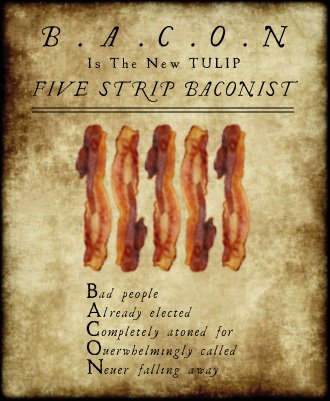 Because some pigs just won’t stay in their theological pen.
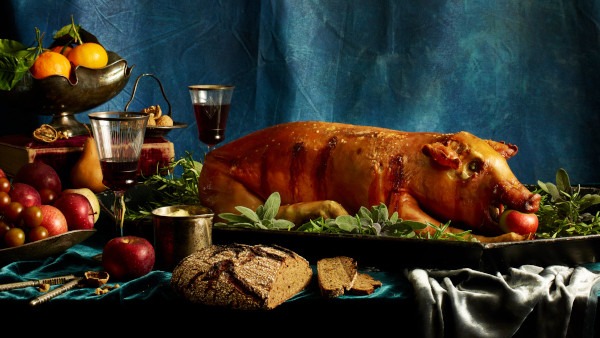 The Swine, the Fruit, and the Great Exception
 What if the only reason is simpler, almost scandalous in our age: G-d said so (Genesis 1 cf. John 1), and He is trustworthy? Confidence in His word over our clever justifications. Reason has its place in apologetics, sure—until a shinier counter-reason struts by and everyone scatters like cats at a vacuum cleaner demo.
 Paul saw this coming in Romans 6:1: “Shall we continue in sin that grace may abound?” The pig doesn’t return to the prodigal’s party with a mutual understanding. Grace isn’t a get-out-of-obedience-free card.