The Shadow of Toxic Feminism: How It Undermines the Christian Church and Biblical Masculinity
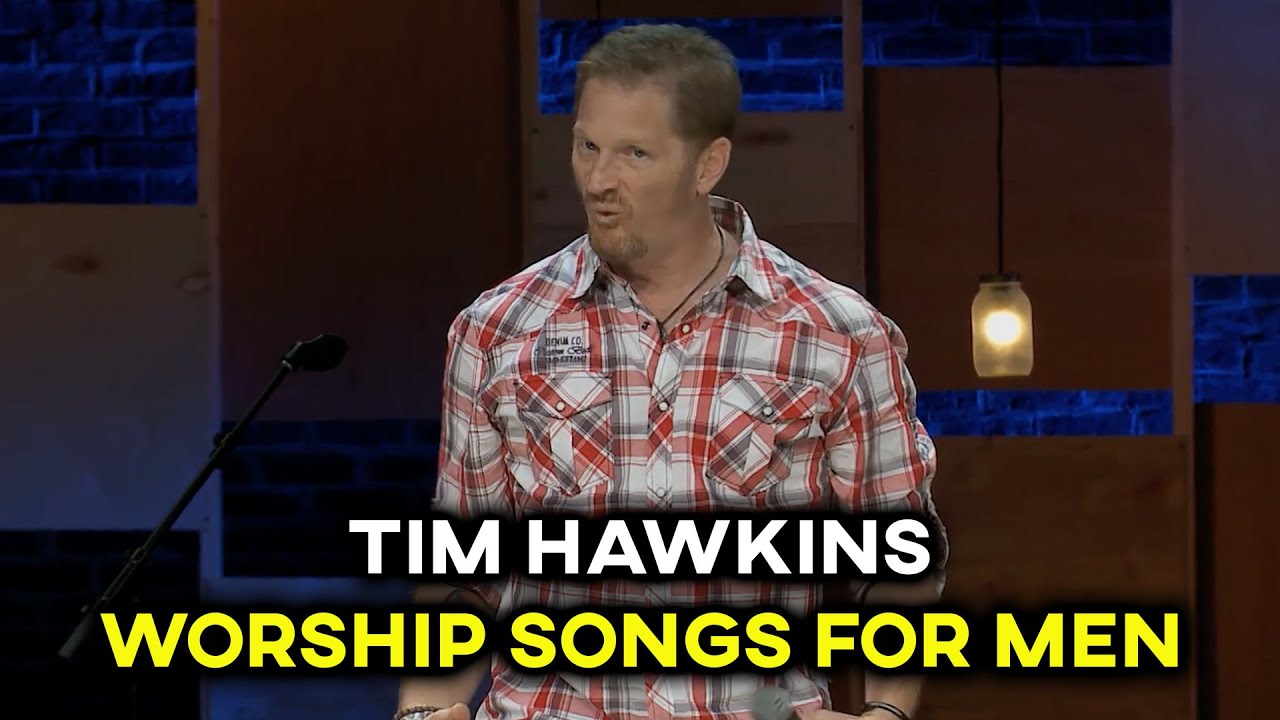
Tim Hawkins slays the stage with his take on the feminist flair that’s infiltrated church worship—turning those Fholy halls into a swoon-fest of breathy ballads where Jesus gets the full rom-com treatment. “I wanna touch Your face, gaze into Your eyes…” Yeah, because every guy’s dream is to croon like he’s on a candlelit date with the Divine. Men are left shuffling awkwardly, thinking, “L-rd, You’re my King, not my prom date—can we just fist-bump and move on to the sermon?” Women thrive in these intimate, emotional anthems, but dudes? We’re wired for “Watch the game with me, Lord: no chit-chat, no eye contact, just vibes and maybe a nap.” Or the ultimate bro hymn: “Grab me a Coke from the fridge, L-rd, and pile on the nachos with extra jalapeños—hallelujah, pass the chips.” Feminism’s subtle church remix has sidelined the brothers, making sanctuaries feel like estrogen echo chambers where male roles get blurred and guys bail for the exits. But hold up—comedy like this can sometimes veer into disrespecting the L-rd, turning sacred truths into punchlines that cheapen His glory. That last bit? It was satire to hammer home a point about how worship styles alienate men, not to belittle G-d.
Above all: Worship ain’t about us—our vibes, our comfort zones, or how the tunes make us feel. It’s laser-focused on glorifying the Almighty, exalting His sovereignty, His power, His holiness. Ditch the self-centered spotlight; bow before the King who deserves every ounce of our reverence, not our preferences. And listen up, sharp and straight: Boys need discipline to forge into men—none of this soft, feel-good nonsense peddled by feminism’s cultural creep, which has eroded male roles in society and the church, leaving guys passive, confused, and ineffective. Step up with grit, submit to Christ’s authority, lead with strength, and worship fiercely, no matter the playlist. Feminism’s effects have weakened the foundations—discipline rebuilds them. No shortcuts, no excuses: become the men G-d commands, or stay boys forever. If you always feel you can finish in time, then why would anybody rush? Masculinity, lashing out from primal instinct, natural design, or what is right?
Biblical masculinity left the chat while ’empowerment’ howled its way to the pulpit.
In the 16th century, the Protestant Reformation shook the foundations of the Roman Catholic Church. Martin Luther, a German monk turned reformer, boldly challenged what he saw as a dangerous deviation from scriptural truth: the doctrine of works righteousness. This teaching emphasized human efforts—penance, indulgences, and rituals—as essential for salvation, overshadowing the grace of G-d through faith alone (sola fide). Luther’s Ninety-Five Theses, nailed to the door of Witteneberg’s Castle Church in 1517, exposed how cultural and institutional pressures had veiled the pure gospel message. Today, a similar veil has descended upon many Christian churches, not through medieval rituals, but through the insidious influence of modern culture, particularly what some critics term “toxic feminism” and the resulting feminization of males. This cultural infiltration distorts scriptural interpretation, prioritizes worldly ideologies over biblical mandates, and risks leading the church astray, much like the errors Luther confronted.
The Reformation’s Warning: A Veil of Human Invention To understand the parallel, recall the core issue Luther addressed. The Catholic Church of his era had become entangled in a system where salvation was commodified—pilgrimages, relics, and monetary contributions were promoted as pathways to divine favor. This “works righteousness” stemmed from a misinterpretation of scriptures like James 2:24 (“You see that a person is justified by works and not by faith alone”), twisted to elevate human merit over G-d’s sovereign grace. Luther, drawing from Romans 3:28 (“For we hold that one is justified by faith apart from works of the law”), argued that such teachings burdened believers with unnecessary legalism, obscuring the freedom found in Christ. This wasn’t merely theological nitpicking; it reflected how the church had absorbed the hierarchical and commercial spirit of its surrounding culture. Powerful institutions and societal norms clouded the clergy’s perception, leading to a gospel diluted by human traditions. Luther’s opposition wasn’t rebellion for its own sake but a call to return to scripture’s unadorned truth. His stand ignited a movement that reclaimed the priesthood of all believers and emphasized personal faith. Fast-forward to the 21st century, and a new cultural veil has emerged, one woven from secular ideologies that have seeped into ecclesiastical life. Just as works righteousness appealed to the era’s emphasis on human achievement, today’s church often bends to progressive cultural pressures, reinterpreting scriptures to align with modern sensibilities rather than challenging them.
The Modern Veil: Toxic Feminism and the Feminization of Masculinity One of the most pervasive influences today is what critics describe as toxic feminism—a radical strain that goes beyond advocating for women’s equality and instead promotes agendas incompatible with traditional Christian teachings. This ideology, rooted in waves of feminism that increasingly embraced secular humanism, abortion rights, and gender fluidity, has infiltrated church doctrines and practices. Proponents argue it empowers women, but detractors see it as dismantling biblical gender roles, elevating female perspectives at the expense of male leadership, and fostering a church environment that emasculates men. Consider the feminization of males within the church—a phenomenon where traditional masculine traits like assertiveness, protection, and spiritual headship are downplayed or vilified as “toxic.”
Oh look, another brave wolf precariously walks the boundary—whether emotional, woke-ethical, or practical—where a misstep could lead to serious consequences—how terribly inconvenient for everyone’s feelings.
Churches increasingly prioritize emotional expressiveness, relational harmony, and “servant leadership” interpreted as passive deference, which some say mirrors feminine stereotypes more than scriptural manhood. Sermons focus on vulnerability and community-building, often sidelining calls to bold action, discipline, and accountability that resonate with men. As one observer notes, this shift creates a “feminized church” where men feel sidelined, leading to disengagement and lower male attendance. This isn’t accidental; it’s a product of cultural osmosis. Modern feminism, influenced by critical theory, views traditional structures—like male headship in marriage (Ephesians 5:23)—as oppressive patriarchy.
Behold the latest girlie-man upgrade: wolf in rainbow drag, preaching fluff while the sheep wave their little pride flags in blissful approval—because nothing says ‘biblical leadership’ like conforming to the culture’s gender-blurring remix.
In response, some churches soften these teachings, promoting “mutual submission” that blurs distinct roles, or elevating women’s issues while neglecting men’s unique callings. For instance, discussions on fatherhood and male responsibility are overshadowed by narratives of empowerment that align more with secular girl-boss culture than biblical complementarity. Critics argue this leads to a generation of “girlie-men” in the pulpit—pastors who preach “fluff” to avoid offending sensitivities, echoing the Reformation’s critique of a clergy more attuned to cultural approval than divine truth. Scriptural misinterpretation exacerbates this. Passages like Galatians 3:28 (“There is neither Jew nor Greek, there is neither slave nor free, there is no male and female, for you are all one in Christ Jesus”) are wielded to erase gender distinctions, ignoring contexts where roles are affirmed (e.g., 1 Timothy 2:12 on teaching authority). This selective reading imports worldly jargon like “gender equality” and “privilege,” diluting the gospel’s countercultural edge. Just as Luther saw works righteousness as a human veil over grace, today’s church risks veiling God’s design for manhood and womanhood under feminist lenses, resulting in families and congregations where men are spiritually passive and women bear disproportionate burdens. Not all views agree; some Christians argue feminism aligns with biblical justice, promoting equality without undermining roles. They point to Jesus’ elevation of women (e.g., Luke 10:38-42) as proto-feminist. Yet, even these perspectives acknowledge that radical strains promote anti-family agendas, like unrestricted abortion or LGBTQ+ affirmation, which clash with scriptures like Psalm 139:13-14 on life’s sanctity. The divide highlights how cultural veils foster division, much like the Reformation’s debates.
Lifting the Veil: A Call to Reformation Today The church’s perception, clouded by this dark veil, mirrors the Reformation’s crisis: a drift from scripture toward cultural accommodation. Toxic feminism and male feminization weaken the body of Christ, producing congregations more attuned to societal trends than eternal truths. Men, called to lead as protectors and providers (Genesis 3:16-19; Ephesians 5:25), are often reduced to “serviceable Betas,” disengaged from their G-d-given vocations. This not only harms families—research shows fatherless homes correlate with societal ills—but undermines the church’s mission. To lift this veil, the church must emulate Luther: return to sola scriptura. Reaffirm biblical masculinity without apology—men as warriors for truth (Ephesians 6:10-18), not emasculated figures. Challenge cultural interpretations that prioritize feelings over doctrine, and foster environments where both genders thrive in complementary roles. As in the Reformation, reform begins with bold voices exposing the veil and calling believers back to unfiltered scripture.In an age of cultural darkness, the church must shine as a beacon of truth, not a mirror of the world. Only then can it escape the snares of modern veils and fulfill its divine calling.
In recent decades, a wave of ideological shifts has permeated society, including the Christian church. What some label as “toxic feminism” – a radical strain that seeks not equality but dominance, often by diminishing traditional male roles – has subtly influenced church teachings, worship styles, and family dynamics. This isn’t about genuine advocacy for women’s rights, which aligns with biblical dignity for all, but rather a worldview that reshapes Scripture to fit modern agendas, leading to the emasculation of men and a distortion of G-d’s design for gender roles. At its core, this influence promotes a matriarchal lens that views masculinity as inherently oppressive, echoing broader cultural narratives where men are portrayed as “toxic” or unnecessary. Within the church, this manifests in diluted leadership, emotionalized worship, and misreadings of key verses that erode the biblical foundation of male headship.
The Feminization of the Church and Its Men One of the most visible effects of toxic feminism in the church is the so-called “feminization” of Christianity. Critics argue that modern worship has shifted toward emotional expressiveness, empathy-driven sermons, and relational dynamics traditionally associated with femininity, alienating men who seek structure, challenge, and action-oriented faith. This isn’t to say emotions have no place in worship – Scripture calls for heartfelt devotion (Psalm 51:17) – but when the church prioritizes “feminine” traits like vulnerability over “masculine” ones like discipline and protection, it risks sidelining half its congregation. More alarmingly, this feminization extends to men themselves. In some circles, men are encouraged to embrace a softened identity, where traditional strength is labeled patriarchal or harmful. This can lead to a crisis where Christian men doubt their G-d-given roles, feeling pressured to conform to a more passive, “empathetic” mold that aligns with feminist ideals. The result? A church where male attendance dwindles, as men perceive it as irrelevant to their innate drives for leadership and provision. Far from empowering women, this dynamic weakens the body of Christ by ignoring the complementary design in Genesis 1:27, where G-d created male and female in His image, each with distinct yet equal contributions.
Misinterpreting the “Bride of Christ”: A Tool for Emasculation A prime example of scriptural twisting under toxic feminism involves the metaphor of the church as the “bride of Christ.” Ephesians 5:25-27 describes Christ loving the church “as his own body,” with the church submitting as a bride to her groom. Traditionally, this illustrates Christ’s sacrificial love and the church’s collective response, not individual gender roles. However, some interpretations misuse this to imply that men, as part of the church, must adopt a “feminine” posture – submissive, receptive, and even bridal in essence. This misreading fosters the feminization of males, suggesting they should embody bridal qualities like passivity or emotional surrender, which blurs biblical manhood.
In reality, the “bride” refers to the corporate church, not individual men becoming “wives” to Christ. Galatians 3:28 affirms, “There is neither Jew nor Gentile, neither slave nor free, nor is there male and female, for you are all one in Christ Jesus,” emphasizing unity without erasing gender distinctions. Twisting this metaphor to emasculate men aligns more with cultural gender fluidity than Scripture, where men are called to be warriors for faith (Ephesians 6:10-18) and protectors of their households. Such distortions aren’t isolated; they stem from a broader feminist hermeneutic that reinterprets gender verses to downplay male authority. For instance, 1 Timothy 2:11-12 – “A woman should learn in quietness and full submission. I do not permit a woman to teach or to assume authority over a man; she must be quiet” – is often dismissed as cultural or patriarchal bias, rather than a timeless principle for church order. This selective reading ignores the context of maintaining G-d-ordained roles, leading to churches where women dominate leadership, further marginalizing biblical masculinity.
Reaffirming Biblical Masculinity: Men as Heads and Protectors Scripture is unequivocal about men’s roles in the family covenant. Ephesians 5:23 states, “For the husband is the head of the wife as Christ is the head of the church, his body, of which he is the Savior.” This headship isn’t tyrannical but sacrificial, mirroring Christ’s self-giving love (Ephesians 5:25). Men are called to lead spiritually, providing direction in prayer, Bible study, and decision-making that honors G-d.
Protection is central to this duty. As in 1 Peter 3:7, husbands must honor wives as “the weaker vessel,” not in intellect or worth, but often in physical strength, implying a protective role. Genesis 3:16 reinforces male headship post-Fall, with the husband ruling over the wife in a redemptive, not oppressive, sense. Men safeguard their families from spiritual threats, like false teachings or moral decay, embodying Proverbs 20:7: “The righteous man walks in his integrity; His children are blessed after him.”Toxic feminism challenges this by portraying headship as misogynistic, encouraging role reversals that contradict 1 Corinthians 11:3: “But I want you to realize that the head of every man is Christ, and the head of the woman is man, and the head of Christ is God.” This hierarchy reflects divine order, not inequality. When men abdicate leadership, families suffer – children lack models of godly strength, and wives bear undue burdens.
Countering the Influence: A Call to Biblical Fidelity Toxic feminism’s impact on the church isn’t inevitable. By returning to Scripture’s plain meaning, Christians can resist these distortions. Men must embrace their roles unapologetically, leading with humility and strength. Churches should foster environments that honor both genders without blurring lines, rejecting the “shadow church” of feminist ideology that mimics true faith but subverts it. In the end, the church thrives when men fulfill their covenant duties as heads and protectors, grounded in verses like Colossians 3:19: “Husbands, love your wives and do not be harsh with them.” This isn’t about power struggles but about reflecting Christ’s love – a bulwark against any ideology that seeks to undermine G-d’s design.
The Role of the Male in the Family and Community in Reformed Protestant Theology Reformed Protestant theology, rooted in the teachings of figures like John Calvin and articulated in confessions such as the Westminster Confession of Faith, emphasizes the sovereignty of G-d, the authority of Scripture, and the covenantal structure of relationships. In this framework, the role of the male—particularly as husband and father—is derived directly from biblical texts, viewing him as a steward under G-d’s authority. This role encompasses headship in marriage, leadership in the family, and service in the broader community or church. It is not about domination but about sacrificial, Christ-like responsibility, where the man is accountable to G-d for his leadership. Below, I outline these roles using key scriptural verses, interpreted through a Reformed lens that stresses the analogy between Christ’s headship over the church and the husband’s over his wife.
Headship in the Marriage Covenant In Reformed theology, marriage is a covenant reflecting the relationship between Christ and His church (Westminster Confession 24.1-2). The husband is designated as the head, meaning he bears authority and responsibility to lead lovingly, not tyrannically. This headship is established in creation order (Genesis 2:18-24) and affirmed in the New Testament, but it is qualified by Christ’s example of self-sacrifice.Ephesians 5:23-25 (ESV): “For the husband is the head of the wife even as Christ is the head of the church, his body, and is himself its Savior. Now as the church submits to Christ, so also wives should submit in everything to their husbands. Husbands, love your wives, as Christ loved the church and gave himself up for her.” Here, headship (Greek: kephalē) implies source, authority, and nurturing leadership, modeled on Christ who “gave himself up” (a reference to His atoning death). Reformed theologians like John Calvin interpret this as the husband exercising authority for the wife’s sanctification and good, not self-interest. The husband’s love must be unconditional, purifying, and self-denying, fostering holiness in the marriage.
1 Corinthians 11:3 (ESV): “But I want you to understand that the head of every man is Christ, the head of a wife is her husband, and the head of Christ is God.”
This verse grounds male headship in the Trinity itself, where equality of essence coexists with ordered roles (as Christ submits to the Father). In Reformed thought, this means the husband leads without implying superiority in worth—both spouses are equal image-bearers (Genesis 1:27)—but with distinct functions. The husband’s authority is delegated from Christ, making him accountable to G-d for decisions in the home.
Colossians 3:19 (ESV): “Husbands, love your wives, and do not be harsh with them.”
Reformed expositors stress that headship prohibits abuse or bitterness, echoing Calvin’s commentary on Ephesians that the husband’s rule must be “tempered with equity and kindness.” This headship extends to decision-making in the marriage, where the husband seeks consensus but bears final responsibility, always aiming for the covenant’s flourishing under G-d’s law.
Aww, bless their little hearts—look at these trembling Betas rolling over like good girls, bellies up, tails tucked, begging for scraps of approval while the actual alpha stands there wondering if this is church leadership or a support group for spiritually neutered puppies. Submit harder, boys; maybe if you whimper loud enough, the gates of hell will die laughing instead of trembling.
Role in the Family Beyond marriage, the male’s role as father involves providing, protecting, and spiritually guiding the household, viewing the family as a “little church” in Reformed covenant theology (e.g., as in the writings of Puritan divines like Richard Baxter).
Ephesians 6:4 (ESV): “Fathers, do not provoke your children to anger, but bring them up in the discipline and instruction of the Lord.”
Fathers are to disciple their children gently, avoiding exasperation, through biblical teaching and discipline. Reformed theology sees this as part of the covenant of grace, where parents train children in the fear of the Lord (Deuteronomy 6:6-7), preparing them for church membership.
1 Timothy 5:8 (ESV): “But if anyone does not provide for his relatives, and especially for members of his household, he has denied the faith and is worse than an unbeliever.”
Provision includes material needs (food, shelter) and spiritual oversight. In Reformed circles, this means the father leads family worship—prayer, Bible reading, and catechism—as emphasized by the Westminster Directory for Family Worship.
Genesis 18:19 (ESV): “For I have chosen him [Abraham], that he may command his children and his household after him to keep the way of the Lord by doing righteousness and justice, so that the Lord may bring to Abraham what he has promised him.”
This models the father’s role in covenant faithfulness, directing the family toward obedience to G-d. The Reformed emphasis is on the father’s accountability: he will answer to G-d for the family’s spiritual state, encouraging a legacy of faith across generations.
Role in the Community and Church In the broader community, Reformed theology views men as potential leaders in the church and society, extending family headship to public service. While not all men are called to formal office, Scripture outlines qualifications that reflect godly manhood.
1 Timothy 3:2-5 (ESV): “Therefore an overseer must be above reproach, the husband of one wife, sober-minded, self-controlled, respectable, hospitable, able to teach… He must manage his own household well, with all dignity keeping his children submissive, for if someone does not know how to manage his own household, how will he care for God’s church?”
Church elders (typically men in Reformed polity, per 1 Timothy 2:12) must first demonstrate faithful family leadership. This links home headship to ecclesiastical roles, where men shepherd the flock as under-shepherds of Christ.
Titus 2:2, 6-8 (ESV): “Older men are to be sober-minded, dignified, self-controlled, sound in faith, in love, and in steadfastness… Likewise, urge the younger men to be self-controlled. Show yourself in all respects to be a model of good works, and in your teaching show integrity, dignity, and sound speech that cannot be condemned.”
Men are to exemplify maturity and doctrine, mentoring others in the community. Reformed theology, influenced by Calvin’s Geneva model, sees men contributing to societal order through vocational faithfulness and civic involvement, as “kings” under Christ’s kingship (Revelation 1:6).
Proverbs 31:23 (ESV): “Her husband is known in the gates when he sits among the elders of the land.”
This implies the husband’s public reputation stems from wise, godly conduct, benefiting the community. Reformed Protestant theology portrays the male’s role as one of humble stewardship: authoritative yet sacrificial in marriage, nurturing and directive in the family, and exemplary in the community. This is not a cultural construct but a divine ordinance, designed to image Christ’s redemptive work (Ephesians 5:31-32). Men fulfill this by relying on G-d’s grace, as no one achieves it perfectly apart from the Spirit’s enabling.
The wolf pack didn’t come to sing backup: “Oh bless their progressive little hearts—the modern church ‘shepherds’ traded in their rod for a pastel-colored therapy staff and a participation trophy. Because nothing says ‘protect the flock’ like disarming every man who still remembers what Psalm 23 actually says and replacing him with a sensitivity-trained Beta who apologizes to the wolves for having teeth. Come right in, predators! The buffet is open, compliments of pastors too busy hugging their inner child to ever swing the rod G-d gave them for actual defense. Grace upon grace… right up until the sheep get devoured. Truly inspiring leadership.”
Religious egalitarianism While religious egalitarianism within the church purports to uphold biblical equality by advocating for unrestricted access to leadership roles for both men and women—often citing passages like Galatians 3:28 to argue against any hierarchical distinctions in ministry or home—it frequently imports subtle cultural assumptions that dilute the clear complementarian framework outlined in Scriptures such as 1 Timothy 2:11-12 and Ephesians 5:22-33. Proponents claim this approach liberates gifted individuals regardless of gender, promoting mutual submission as the ideal (Ephesians 5:21), yet it risks overlooking the divine order of headship that reflects the Trinity and Christ’s sacrificial authority over His church, potentially leading to a flattened structure where masculine leadership is diminished in favor of egalitarian consensus. This internal church perspective, though framed as scripturally derived, can inadvertently pave the way for broader ideological shifts by emphasizing personal gifting over ordained roles.
In stark contrast, egalitarianism outside the church—manifest in secular feminism—divorces itself entirely from biblical moorings, grounding its push for gender parity in atheistic humanism, intersectional theory, or postmodern relativism that often rejects absolute truths like the sanctity of life (Psalm 139:13-14) or binary gender distinctions rooted in creation (Genesis 1:27). Secular variants aggressively pursue not just equality but reconfiguration of societal power structures, endorsing practices such as unrestricted abortion rights, gender fluidity, and the deconstruction of traditional family units, which directly contradict Christian doctrines on marriage as a covenantal reflection of Christ and the church. Unlike religious egalitarianism, which at least nods to scriptural authority (albeit selectively), its secular counterpart operates in open rebellion against divine design, prioritizing autonomy and cultural revolution over submission to G-d’s word—making it a far more insidious threat that, when seeping into the church unchecked, erodes the foundations of biblical masculinity and the gospel’s transformative power.
In summary, The Shadow of Toxic Feminism exposes how a radical ideology—masquerading as equality but demanding female dominance—has quietly infiltrated Christian churches, twisting Scripture, feminizing worship, and eroding biblical masculinity. Drawing a striking parallel to the Protestant Reformation, the article reveals modern “veils” like emotionalized “breathy ballads,” misreadings of Galatians 3:28 and Ephesians 5, and the rejection of male headship that alienate men, produce passive congregations, and weaken families. From satirical jabs at touchy-feely worship to urgent calls for discipline, protection, and warrior-like leadership, it demands a bold return to sola scriptura—unapologetically affirming men as sacrificial heads, spiritual stewards, and covenant warriors under Christ. The church isn’t meant to mirror culture’s “girl-boss” trends; it’s called to shine as a beacon of G-d’s unchanging design for gender roles. In a world peddling soft boys and blurred lines, maybe it’s time for another Reformation—one where men stop apologizing for being men. Because if the church keeps singing love songs to Jesus while forgetting how to raise warriors for Him… well, the gates of hell won’t just prevail—they’ll swing wide open, roll out the red carpet, and host a victory parade complete with confetti made from shredded Bibles. Dull wolves die first. Don’t volunteer.
Soli Deo Gloria Wit
Manmade projections upon G-d in their image
A
“I am the Good Shepherd. The rod in My hand is not for striking wolves… it is for guiding lambs. When the hour comes, I lay down My life — unarmed, unresisting — so the sheep may live.”
“He carried no sword, drew no blade. Only a simple rod to lead the flock. And when the hireling fled and the wolf came near, He stood between them… with empty hands and open arms.”
“Behold the Shepherd who never raised a hand in violence. One rod to guide, one heart to die for the sheep. ‘Greater love has no one than this…’”
“Not a warrior’s staff, not a soldier’s spear — just a shepherd’s rod, and a love that refuses to defend itself at the cost of the flock.”
“They came for Him with swords and clubs. He answered with a staff meant only for sheep. And in that moment the Shepherd became the Lamb.”
B
“Oh no, Jesus just used His rod on a wolf—how un-Christlike! Everyone knows the real Good Shepherd just stands there smiling while the sheep get shredded. Love means never interrupting a predator’s dinner plans. ”
“Breaking news: Local carpenter ruins pacifist brand by actually protecting His flock. Sources confirm He should’ve just quoted Scripture at the wolf and hoped for the best. ‘Turn the other cheek’ clearly applies to literal mauling. ”
“Jesus swinging the rod like it’s Game 7. Meanwhile the theology Twitterati clutch their pearls: ‘But He said love your enemies! This is violence! Cancel the Sermon on the Mount, we’ve got a heretic with a stick!’”
“Wolf: ‘He’s unarmed, this’ll be easy.’ Jesus: cracks rod across snout Wolf: reconsiders life choices Modern commentators: ‘This is NOT the vibes we projected onto 1st-century Judea. Where’s the non-violent interpretive dance?’”
“Behold the Prince of Peace™ aggressively redefining ‘rod and staff they comfort me.’ Critics: ‘He should’ve dialogued with the wolf first. Maybe offer it therapy coupons. This is literally oppression of apex predators.’”