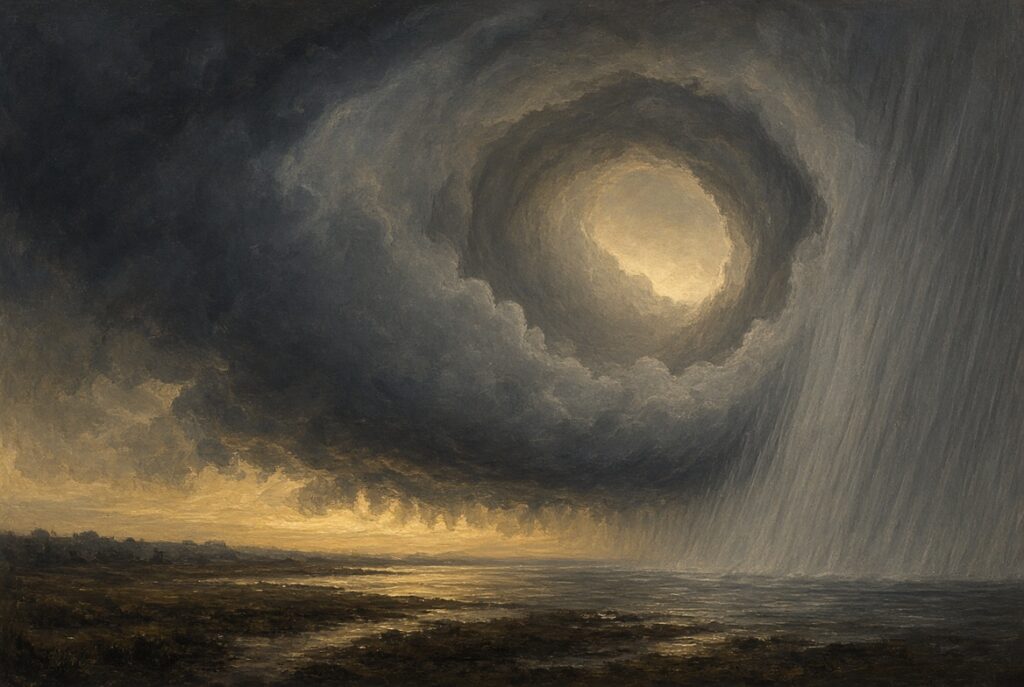
The eye does not blink. A wall walks, and the calm inside it is not a sending. Isaías borrows the mouth. The verse keeps its own. Woe is me. Am I the meteorologist? The likeness may be written. It should not be trusted to close.
Five stones were counted. None of them thrown. The hand stayed open. A gulf borrows the name and does not blink. Woe is me. Am I the meteorologist?
He came without a childhood in the bulletin. The eye is the one open place. It does not water. The spring that left the garden is not a mouth the verse will swear to. The sign is not the sending.
The last page left the stone in the bag and the oil already on the shepherd. Blessed Samuel did not spend the child to get the king home. This page picks up the same hand. Thanks for sending me. Send it. The word was Isaiah’s, here am I, send me (Isaiah 6:8), and it was not a claim to read the sky. The stone after the giant’s errand is still a stone. It is not a commission to name the wind. Another stone was already under a head before any sling was chosen. Jacob took of the stones of that place and lay down, and dreamed, and behold a ladder set up on the earth, and the top of it reached to heaven, and the angels of G-d ascending and descending on it, and the L-rd stood above it (Genesis 28:11–13). He woke afraid, and said the L-rd is in this place, and I knew it not. He set the stone up for a pillar and poured oil on the top of it, and called the name of that place Bethel (Genesis 28:16–19). Five in a bag, none thrown. One under a sleeper, then stood on end. The dream was given. It was not read out of a gulf. The stone after the giant is still a stone. The stone after the dream is a house of G-d only because he said so. Neither one names the wind.
A storm in the Gulf is gathering. By Wednesday night it had a prophet’s name in the romantic list, Isaías, the accent leaning on the í, and a motion that bent and then turned north toward the weekend. Intensity was picking up. A watch for the wind along the northern bend. A watch for the water from the river’s mouth to the town that faces north. The proper names stay under this leaf. They do not stay under the warning. The advisory prints them. This school does not pretend the advisory is a scroll.
Not a word from the L-rd about the track Say it before the imagery is allowed to be beautiful. This is not a prophecy. Deuteronomy already killed the dreamer who gives a sign and says go after other gods (Deuteronomy 13:1–5). It already barred the nations’ readers of times (Deuteronomy 18:10–14). A prophet who speaks a word the L-rd has not sent is the figure Jeremiah was sent against (Jeremiah 23:25–32). I will not put the coast inside that guilt in order to feel sent. Woe is me, am I the meteorologist? The question is the refusal of the other sentence. Here am I, send me, was answered in a throne room, in the year a king died, by a man of unclean lips (Isaiah 6:1–8). It is not answered by a likeness in a name-list.
He comes the way Kings brings Isaiah. No door cut into the book. Sackcloth already on the messengers. A name already known (2 Kings 19:2). The cloth is goat hair, coarse, and it irritates the flesh. It does not hold the water. It drains. Mourning, on that page, is not a mood laid over a robe. It is a weave that rubs, and lets the rain through, and is already on the men before the prophet speaks. Presence first. The preface refused. That likeness may be kept. The blast in that chapter was against Assyria, and it was spoken as thus says the L-rd (2 Kings 19:6–7). This blast is weather. Landfall is not a sermon. If the watch becomes a warning where a reader lives, the faithful act is the ordinary one. Leave if told to leave. The article, if it sings, does not sing over an evacuation order. The sackcloth drains. It does not interpret.
The sheet in the narthex is not the foe. A church bulletin tells the hour, the psalm, the name of the one who is sick. It is a table of what the assembly is about to do. Do not spend it to make a point about a storm. The advisory is the other sheet, the one that prints wind and water. Both may be called a bulletin. Only one of them is in play here, and even that one is not an enemy. It is a report. The ear may hear a round in the word, a bullet in, something sent. Let it stay under. What was sent, on the earlier page, was a stone, and before that a staff that hit the ground. The sheet that gathers the saints is not the thing that was fired. Leave it to its hour and its psalm.
The unblinking Spanish kept the prophet in its mouth. The gulf only borrowed the syllables. Isaiah had already said how a word arrives when the hearers will not have it whole: precept on precept, line on line, here a little, and there a little (Isaiah 28:10, 13). A syllable here. A syllable there. The drunkards of Ephraim heard it as stammering. The L-rd said he would speak to them in that same foreign cadence, that they might go and fall backward. Isaías is that kind of borrowing. Not the precept. The bits. He does not blink. The eye is calm, and it stays open while the wall walks. Unblinking is not tenderness. It is the look that does not water. Court it only as cadence: he came without a preface, he will not look away, he says nothing, and a coast hears a woe anyway. Then set the glass down. A lover written out of an eye is still water rising where people sleep. The syllable is not the sending. Here a little, there a little, is how a refused word returns. It is not how a man volunteers to read the sky.
Woe to them that join house to house (Isaiah 5:8). Woe to them that call evil good (Isaiah 5:20). Woe to them that are wise in their own eyes (Isaiah 5:21). And the woe that turns and sits down: woe is me, for I am undone (Isaiah 6:5). The storm does not get to preach these. The name only borrows the mouth. If he speaks to me or to you, the sentence is the undone one, not the volunteered one.
From the garden’s spring A mist went up from the earth and watered the ground (Genesis 2:6). A river went out of Eden to water the garden, and from there it parted into four heads (Genesis 2:10). Heads, not a mouth the verse will swear to. Mouth and hole are the image for an opening, useful, and submerged. Hiddekel goes east of Assyria. Euphrates keeps its name (Genesis 2:14). The same Hiddekel is the river Daniel stands beside, which the versions call Tigris (Daniel 10:4). Babylon sits downstream of the third and the fourth. The harps were hung there (Psalm 137:1–2).
The river goes out of Eden, and parts, and the two that reach the captivity are sat beside, and the harps are hung. The harps are hung, and the two that reach the captivity are sat beside, and the river that parted is the river that went out of Eden.
The ear hears tiger in the later name. The Hebrew does not say it. The stripe is the reader’s. Three bands once fell on the camels (Job 1:17). Sin couches at the door, and its desire is for you, and you must rule it (Genesis 4:7). The likeness is the posture, not a zoology. Something patient at the threshold. A low roll under the last stressed word. It does not have to spring. It does not get to interpret the dream.
The dream-law is older than the gulf. Nebuchadnezzar’s decree protected a king from interpreters who would agree on a lie (Daniel 2:5–9). Israel’s statute protected a people from a wonder that walked them off the covenant. Neither banned a dream given by G-d. Joseph and Daniel both said the interpretation belongs to G-d, not to the art (Genesis 40:8; Daniel 2:27–28). Joel later pours the dream on ordinary flesh, sons and daughters, old men, servants (Joel 2:28–29). Isaiah 29 makes the attacking multitude itself a dream of a night vision, a hungry man who eats and wakes empty (Isaiah 29:7–8). The sign that does not take form is already in the prophet. A hurricane’s eye is not that verse. It is only a round calm inside a wall of wind.
The meteor, and the child There is an entry that calls a meteor-stone her arrow. The Jewish Encyclopedia on Lilith gathers what the later pages did with a single Hebrew word in the desolation of Edom: the night-creature rests there, and finds a place of rest (Isaiah 34:14). Scripture gives a ruin and a cry between wild things. It does not give a queen, a first wife, a stealer of infants, a bride of the night who must be struck off a child’s face. Those are the after-pages. Talmud and charm and the lying-in tablet. The encyclopedia is honest that the child-taking belongs to the persistence of superstition. This school will not hire it. Goo. Goo. A small mouth finding the name, not a search set on the child. The entry can be looked up. The infant is not the query.
The meteor is the figure for that entry, not a stone from heaven with a message on it. An arrow from a later hand, flung at a name in Isaiah, and a remedy invented against the arrow. Warn, then. The child in the last article is still the child. The weaned child does not put a hand on the adder’s den so that a page can have a thrill (Isaiah 11:8–9). They shall not hurt or destroy on my holy mountain. Non-combatants do not make the front of the page. No innocent life is the cost of getting a sentence home. The folklore that spends the infant to explain a fever has left the chapter. The rebuke comes next, and it is not against the child. It is against the reader who came for the marvel.
Signs, and the rebuke A generation asks for a sign, and is given none but the sign of Jonah (Matthew 12:39; 16:4). They ate the bread and did not see the bread. You seek me, he said, not because you saw signs, but because you ate your fill (John 6:26). The rebuke is for those who follow the wonder and will not stay for the word. A gulf that borrows a prophet’s name is a wonder. It is not a reason to cross. Hebrews gathers the old speakings—many portions, many ways, by the prophets—and sets a Son over them (Hebrews 1:1–2). The sundial, the sackcloth, the night vision, the shut gate, the dream that empties: they are ways. They are not a license to become the reader of this weekend’s wind.
Isaiah, when the king asked for a sign, had already started out. The word met him in the middle court and said return (2 Kings 20:4–5). The shadow on the steps of Ahaz was brought back (2 Kings 20:8–11). Even that sign was asked, and given, and then sat beside a pride that did not return according to the benefit (2 Chronicles 32:24–25). The added years were not a craft. The boil was not assigned a cause in Kings. The captivity that followed was covenant, unpaid sabbaths, messengers mocked, until there was no remedy (2 Chronicles 36:15–21). Daniel confessed it from inside the term (Daniel 9). Ezra carried the law back across the threshold. Nehemiah shut the gates when the evening shadow of the mountains reached them (Nehemiah 13:19). Stand by. What might not take form does not have to be forced into a track.
A staff hit the ground and was a serpent. The man who threw it ran, and was told to take it by the tail, and it was a staff again (Exodus 4:2–4). In the wilderness the bite was already killing. Moses lifted the bronze, and whoever looked, lived (Numbers 21:4–9). That lifting is set beside the Son of Man (John 3:14). Look is not license. Later the same bronze had to be destroyed. Israel burned incense to it. Hezekiah broke it in pieces and called it Nehushtan, a thing of brass (2 Kings 18:4). Isaiah, in that same reign, already had the smoke in his mouth. Incense is an abomination to the L-rd when it is brought with blood on the hands (Isaiah 1:13). A people provoke him to anger continually to his face, sacrificing in gardens and burning incense on brick (Isaiah 65:3). He will repay their iniquities, and the iniquities of their fathers, who burned incense on the mountains and blasphemed him on the hills (Isaiah 65:7). The sign that once saved had become the thing worshiped. The breaking was not a hatred of the first mercy. It was a refusal to keep burning incense to the instrument, the same refusal the prophet spoke against the high places. A bullet in, if the ear still hears one under the advisory, is not a shot at the sheet in the narthex, and not a shot at the serpent while it was still the look that lived. It is the sound of a thing sent past its errand. When the errand is over, the brass is brass. Do not cense it. The L-rd is already angered by that smoke.
Ishmael, in the nightmare Another play, and not another forecast. The name is older than the gulf, and it splits.
One Ishmael is the boy of the wilderness. His hand against every man, and every man’s hand against him, a wild donkey of a man (Genesis 16:12). Hagar’s child, sent out, and heard by G-d when the water was gone (Genesis 21:15–19). That one is not the knife at the table.
The other comes in the seventh month, of the royal seed, with ten men, and eats bread with Gedaliah at Mizpah, the man Babylon had set over the land. Then he rises and strikes him with the sword (Jeremiah 41:1–3). The next day he goes out weeping to meet eighty men who have come with offerings, beards shaved, clothes torn, bodies gashed, and he says come to Gedaliah. Inside the city he kills them and casts them into the cistern Asa had cut for fear of Baasha (Jeremiah 41:4–9). The weeping was the lure. The feast was the door. A nightmare is only the day with the lamps put out: bread, then the sword, then the pit filled.
Ten of them said, do not kill us, for we have stores of wheat and barley and oil and honey hidden in the field. So he refrained, and did not kill them among their brothers (Jeremiah 41:8). Barley and wheat are not a riddle to be solved into a sign. They are the plea that buys a life. Hidden food, named, and a hand that stops. Whatever else the pair has been made to mean in a later dream-book, the chapter means that. The stores were in the field. The field was the reason the knife did not finish.
Do not hire him as the storm’s other face. An assassin in a nightmare is a page in Jeremiah, after the house was burned, when the remnant still had a governor and lost him at supper. It is not a reading of the wind. The play may crouch beside the other crouch: something patient at the door, a welcome that is not a welcome, a weeping that is not grief. Then the rebuke, already given. A wonder is not a reason to cross. The ten lived because they had grain, not because a seer named the month. Stand by. The child is not in the cistern. The article will not put him there.
The stone, still The line goes out to the wall, and the cloth is on the messengers, and the name is already in the sending, and the prophet speaks. The prophet speaks, and the name was already in the sending, and the cloth was on the messengers, and the wall is where the line comes back.
Five stones. None thrown, on the earlier page, and the count not forgotten. The hand is open again. Not here am I, send me, into an advisory. Woe is me. Am I the meteorologist? The answer this school can bear is no. The L-rd has interpreters who were sent. A man at a desk with a likeness is not one of them by virtue of the likeness. Honor is the hands held up until the promise can be seen, and the promise is not a landfall. The fruit is on the far side. He. He. The child will not be hurt. A catch, a catch, and not a word. Not a fee. A small throat, unspent, and the sound already gone. The eye can be written. It should not be trusted to close. The sheet in the narthex keeps its hour. The brass, once looked to, is not a god. Nehushtan is the name for a mercy that outlived its errand and was broken rather than censed.